








Piles Treatment in Hyderabad: Options for Grade 1–4 Piles

Piles, also called haemorrhoids, can cause bleeding during bowel movements, itching, swelling, discomfort or a lump near the anus. Treatment depends on whether the piles are internal piles or external piles, their grade, the severity of symptoms and whether conservative measures have helped.
Lux Hospitals provides personalised piles treatment in Hyderabad, including dietary and lifestyle guidance, medicines, office-based procedures and surgical options for suitable patients. Our proctology team in Gachibowli evaluates the condition before recommending treatment.

Book Appointment Book Appointment

What Are Piles?

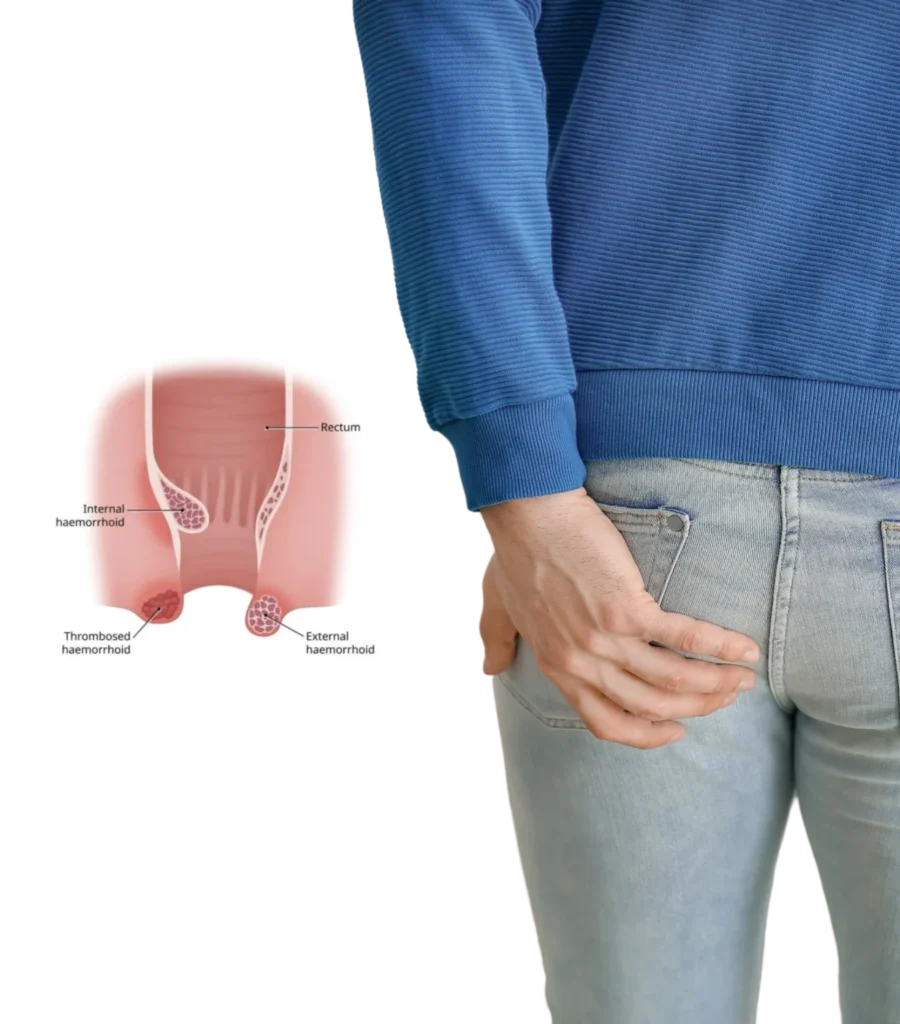
Piles are swollen or enlarged blood vessels and supporting tissues inside or around the anus.

They may be classified as:
  • Internal piles: Develop inside the rectum and may cause painless, bright-red bleeding or tissue that comes out during bowel movements.
  • External piles: Develop beneath the skin around the anus and may cause itching, swelling, tenderness or pain.
  • Thrombosed external piles: Occur when a blood clot develops inside an external haemorrhoid, sometimes causing sudden and significant pain.

Not every episode of anal pain or bleeding is caused by piles. Anal fissures, fistulas, infections, inflammatory bowel disease and other colorectal conditions can produce similar symptoms. A medical examination helps confirm the diagnosis before starting piles treatment in Hyderabad.

What are Common Symptoms of Piles?

Piles symptoms can include:

  • Bright-red blood during or after passing stool
  • Itching or irritation around the anus
  • Swelling or a lump in the anal area
  • Discomfort while sitting or passing stool
  • Tissue that protrudes during bowel movements
  • Mucus discharge or a feeling of incomplete cleaning
  • Sudden pain from a thrombosed external pile

Piles symptoms are generally similar in both men and women.. However, pregnancy, childbirth, chronic constipation and pelvic-floor changes can increase the likelihood of piles in some women.

What Causes Piles?

Piles may develop when repeated pressure affects the veins and supporting tissues in the anal canal.

  • Common contributing factors include:
  • Straining during bowel movements
  • Chronic constipation
  • Recurrent diarrhoea
  • Sitting on the toilet for prolonged periods
  • A low-fibre diet
  • Pregnancy
  • Obesity
  • Frequent heavy lifting
  • Age-related weakening of supporting tissues
  • Delaying bowel movements
  • Repeatedly passing hard stool

Reducing constipation and avoiding excessive straining are important parts of early piles treatment and recurrence prevention.

When Rectal Bleeding Needs Prompt Evaluation

Rectal bleeding may have causes other than piles. Seek medical evaluation if:
  • Bleeding is persistent, recurrent or increasing
  • Blood appears mixed with the stool
  • Stools are black or tar-like
  • You experience dizziness, weakness or fainting
  • You have unexplained weight loss
  • There is a persistent change in bowel habits
  • You have fever, pus discharge or severe swelling
  • You have a personal or family history of colorectal disease
  • Heavy bleeding, fainting or symptoms of shock require urgent medical attention.

How Are Piles Diagnosed?

A proctologist usually begins by reviewing your symptoms, bowel habits, medicines and medical history.

  • Depending on the symptoms, evaluation may include:
  • Examination of the skin around the anus
  • Digital rectal examination
  • Anoscopy or proctoscopy to examine the inside of the anal canal
  • Additional investigations when the diagnosis is uncertain or bleeding requires further evaluation

Accurate piles diagnosis and treatment planning helps distinguish piles from fissures, fistulas, abscesses, rectal prolapse and other causes of anal symptoms.

Grades of Internal Piles

Understanding the grade helps the doctor recommend suitable treatment for Grade 1–4 piles, but symptoms and examination findings are equally important.

What It Means

Common Treatment Approach

  • Grade 1 piles
    Piles remain inside the anal canal and may bleed
    Fibre, fluids, bowel-habit changes and medicines
  • Grade 2 piles
    Piles come out during a bowel movement but return inside on their own
    Conservative care or an office-based procedure
  • Grade 3 piles
    Piles come out and usually need to be pushed back inside
    Office procedure or surgery, depending on symptoms and anatomy
  • Grade 4 piles
    Piles remain outside and cannot be pushed back inside

Surgical treatment is often considered after evaluation. External piles are not classified using the Grade 1–4 system. The grade alone does not determine treatment; bleeding, pain, prolapse, associated conditions and previous treatment response are also important.

Piles Treatment Options

There is no single best treatment for piles in Hyderabad that is suitable for every patient. The appropriate treatment depends on the type of piles, grade, symptoms, examination findings and overall health.

1. Dietary and Lifestyle Treatment for Piles

  • Early or mild piles can often be managed without surgery.
  • Treatment may include:
  • Increasing dietary fibre gradually
  • Drinking adequate fluids, if medically appropriate
  • Avoiding excessive straining
  • Limiting time spent on the toilet
  • Responding promptly to the urge to pass stool
  • Staying physically active
  • Using a stool softener or fibre supplement when prescribed
  • Taking warm sitz baths for temporary symptom relief

Read our diet tips for piles patients for practical fibre and hydration guidance.

2. Medicines for Piles Symptom Relief

  • A doctor may recommend medicines to manage constipation, itching, inflammation or discomfort. Some topical treatments offer short-term relief but do not correct every underlying pile.
  • Avoid using over-the-counter creams for prolonged periods without medical guidance, especially if bleeding continues.

3. Office-Based Procedures for Piles

If symptoms continue despite conservative care, selected internal piles may be treated with a procedure that does not require major surgery.

Options may include:

  • Rubber Band Ligation
    A small band is placed around the base of an internal pile to reduce its blood supply. The treated tissue shrinks and later separates.
  • Sclerotherapy
    A solution is injected into the haemorrhoidal tissue to make it shrink.
  • Infrared Coagulation
    Infrared energy is applied to reduce the blood supply to selected internal piles.The right procedure depends on the pile grade, position, symptoms and medical history.

Surgical Treatment for Piles

Piles surgery in Hyderabad may be considered when symptoms persist, piles are significantly prolapsed or conservative and office-based treatments have not provided adequate relief.

  • Surgery may be considered when:
  • Piles are large or significantly prolapsed
  • Grade 3 or Grade 4 piles cause persistent symptoms
  • Bleeding continues despite appropriate treatment
  • Office procedures have not provided adequate relief
  • External and internal piles occur together
  • Symptoms significantly affect everyday activities
  • A complication such as severe thrombosis is present

Patients considering piles surgery in Hyderabad should first undergo evaluation to determine which procedure is appropriate.

Surgical treatments for piles include:

Haemorrhoidectomy

The enlarged haemorrhoidal tissue is surgically removed. This may be recommended for large, advanced or combined internal and external piles.

Stapled Haemorrhoidopexy

A stapling device repositions prolapsed internal haemorrhoidal tissue and reduces its blood supply. It is suitable only for selected patients.

Haemorrhoidal Artery Ligation

Doppler guidance may be used to identify and close arteries supplying the haemorrhoids. A mucopexy may also be performed to reposition prolapsing tissue.
The appropriate piles surgery is selected according to the patient’s condition, pile grade, anatomy and expected benefits and risks.

Laser Piles Treatment in Hyderabad

  • Laser-based procedures may be considered for selected internal piles. The procedure aims to reduce haemorrhoidal tissue using controlled laser energy.
  • Lux Hospitals provides evaluation for laser treatment for piles in Hyderabad for suitable patients. Laser treatment may offer potential advantages such as smaller wounds and a shorter recovery in selected cases.
  • However, piles laser treatment in Hyderabad is not automatically suitable for every type or grade of piles. Expected discomfort, recovery, risks and recurrence vary between patients and procedures.
  •  A consultation is necessary before deciding whether laser piles treatment in Hyderabad is appropriate for you.

Recovery After Piles Treatment

Recovery varies according to the procedure and the patient’s health.
After treatment, patients may be advised to:

  • Take prescribed medicines as directed
  • Keep stool soft with fibre, fluids or prescribed medication
  • Avoid straining during bowel movements
  • Maintain local hygiene
  • Avoid heavy lifting until cleared by the doctor
  • Attend scheduled follow-up appointments
  • Report heavy bleeding, fever, worsening pain or difficulty passing urine

Some office procedures allow a relatively quick return to routine activities. Recovery after piles surgery may take longer. Your doctor will provide an individual recovery plan.

Can Piles Return After Treatment?

Piles can recur after medicines, office procedures, laser treatment or surgery. Piles recurrence after surgery may be influenced by:

  • Continuing constipation
  • Repeated straining
  • Low-fibre eating patterns
  • Prolonged toilet sitting
  • Obesity
  • Pregnancy
  • The original grade and type of piles
  • The procedure performed

Managing constipation and following medical advice can reduce—but cannot completely eliminate—the possibility of recurrence after piles treatment in Hyderabad.

When Should You Consult a Piles Specialist?

Arrange an evaluation with a piles specialist if you have:

  • Recurrent bleeding during bowel movements
  • Persistent anal pain, itching or swelling
  • A lump that does not reduce
  • Tissue coming out during bowel movements
  • Symptoms that continue despite fibre and medicines
  • Repeated episodes of piles
  • Uncertainty about whether the problem is piles or an anal fissure
  • Symptoms interfering with work, sleep or daily activities

Early evaluation can help identify the cause and may allow treatment before the condition becomes more troublesome.

Piles Treatment Cost in Hyderabad

The cost of piles treatment depends on:

  • Type and grade of piles
  • Treatment or procedure selected
  • Preoperative investigations
  • Anaesthesia requirements
  • Room category
  • Medicines and follow-up care
  • Insurance eligibility

View the current piles surgery cost in Hyderabad or request a personalised estimate after consultation.

Why Choose Lux Hospitals for Piles Treatment in Hyderabad?

Patients looking for a piles hospital in Hyderabad can access evaluation, conservative care and surgical treatment at Lux Hospitals, Gachibowli.
Patients can access:

  • Experienced proctology care: Evaluation by doctors experienced in piles and other anorectal conditions
  • Treatment based on diagnosis: Recommendations according to pile type, grade, symptoms and overall health
  • Multiple piles treatment options: Conservative care, office-based procedures and surgical treatments for appropriate patients
  • Minimally invasive piles treatment: Laser and other modern procedures for suitable cases
  • Private consultation: Respectful evaluation of sensitive symptoms
  • Coordinated care: Support from diagnosis through treatment and follow-up
  • Accessible Hyderabad location: Hospital care in Gachibowli, near IKEA

These factors help patients compare options when searching for the best piles hospital in Hyderabad or the best hospital for piles treatment in Hyderabad.

The appropriate hospital should provide accurate diagnosis, suitable treatment options and clear follow-up guidance rather than relying only on promotional claims.

Best Proctologist and Colorectal Surgeon in Hyderabad

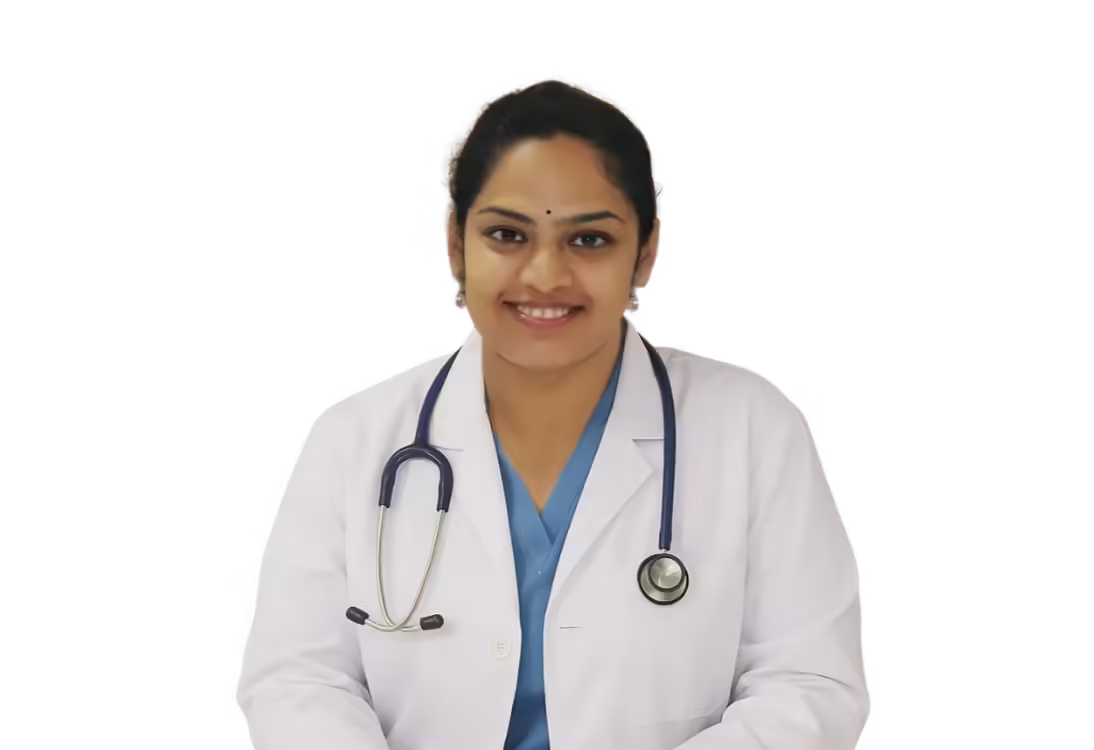
Dr. Samhitha Reddy

MBBS, MS, FISCP, FMAS, DMAS

Member - American Society of Colon & Rectal Surgeons (ASCRS)
Speciality : Consultant Proctologist & Laparoscopic Surgeon

Experience : 8 years

Best General and Laparoscopic Surgeon in Hyderabad

Dr. Abhishek Katha

MBBS, MS, FMAS

Speciality : Consultant General & Advanced Laparoscopic Surgeon

Experience : 17 years

Dr. Tejasree Vengala

Dr. Tejasree Vengala

MBBS, MS (General Surgery) Fellowship in Laparoscopic Surgery

Consultant Breast Surgeon, Thyroid & General Surgeon

Experience : 7+ years

Testimonials

"laser treatment for my dad’s piles"

Dr. Samhitha Reddy’s laser treatment for my dad’s piles worked wonders. He’s pain-free now and really grateful for her care!

Patient Image

Mithilesh Sah

"smooth and painless"

Dr. Samhitha Reddy’s laser treatment for my fissure wassmooth and painless. She was super kind, which made the whole process much easier.

Patient Image

Rohit Kumar

"Colorectal Diseases"

Lux hospital is one of best hospital in Hyderabad for colorectal diseases. Dr. Samhita Mam is one the finest surgeon, very polite and explain everything in detail and the hospital staff is soo caring..Thank you so much..

Patient Image

Arti Shettiwar

"Admitted for my fistula surgery"

I was admitted for my fistula surgery, Dr Samhita has been very helpful in detecting the issue and explained the causes and prevention . Surgery was seamless and without pain.Also the support staff have been extremely helpful and were available every time. Keep up doing the great work.

Patient Image

Sanat Jayasingh

"Fistula Surgery"

We were admitted for fistula surgery and had to be under supervision for 24 hours. I could say that the staff including from the doctors and the Nurse and the house keeping staff, everyone was so polite and helpful and attending the patient within no time. Hospitalisation here was so smooth and Special thanks to Ashok(patient relationship manager) who is super polite and answering the questions related to insurance

Patient Image

Sujith V

Latest Health Articles by Lux

Myomectomy vs Hysterectomy: Which to Choose?

August 26, 2026

Piles Surgery Cost in Hyderabad: What to Expect

August 26, 2026

Liposuction Cost in Hyderabad: Complete Cost Guide

August 25, 2026

Fibroid Surgery Cost in Hyderabad: Complete Cost Guide

August 25, 2026

Frequently Asked Questions About Piles Treatment

Can piles be treated without surgery?

Yes. Many early or mild piles can be managed with fibre, fluids, improved toilet habits, constipation treatment and medicines. Office-based procedures may be considered if symptoms continue. Surgery is generally reserved for selected advanced, prolapsed or persistent piles.

Which doctor should I consult for piles?

A proctologist or colorectal surgeon diagnoses and treats piles. A general surgeon with experience in proctology may also provide treatment. Consult a doctor if bleeding, pain, swelling or prolapse persists.

Which grade of piles needs surgery?

Grade 1 and many Grade 2 piles are commonly managed without surgery. Some Grade 3 piles and many symptomatic Grade 4 piles may require surgery. The decision depends on symptoms, examination findings and response to previous treatment.

Is laser treatment for piles suitable for every patient?

No. Laser treatment may be an option for selected internal piles, but it is not suitable for every type or grade. A proctologist must evaluate the condition before recommending it.

Is laser piles treatment completely pain-free?

No procedure can be guaranteed to be completely pain-free. Some minimally invasive treatments may cause less postoperative discomfort than conventional surgery in selected patients, but experiences vary.

How long does recovery after piles surgery take?

Recovery depends on the procedure, extent of disease and individual health. Some patients return to routine activity relatively quickly after an office or minimally invasive procedure, while recovery following haemorrhoidectomy may take longer.

Can piles come back after surgery?

Yes, recurrence is possible after any treatment. Managing constipation, avoiding straining and following the doctor’s advice can help reduce the risk.

Is rectal bleeding always caused by piles?

No. Rectal bleeding can have several causes. Persistent, recurrent or unexplained bleeding should be evaluated rather than assumed to be piles.

Where can I find piles treatment near gachibowli in Hyderabad?

Lux Hospitals provides consultation and piles treatment in Hyderabad at its Gachibowli facility near IKEA. Patients can book an appointment with the proctology team for diagnosis and personalised treatment recommendations.

How can I book an appointment for piles Treatment in Hyderabad?

Book an appointment online or contact Lux Hospitals to arrange a consultation with the proctology team at Gachibowli, Hyderabad.

×

Chat on WhatsApp...

WhatsApp Icon Open In WhatsApp

If it doesn’t open automatically, click here.

Chat ↗